
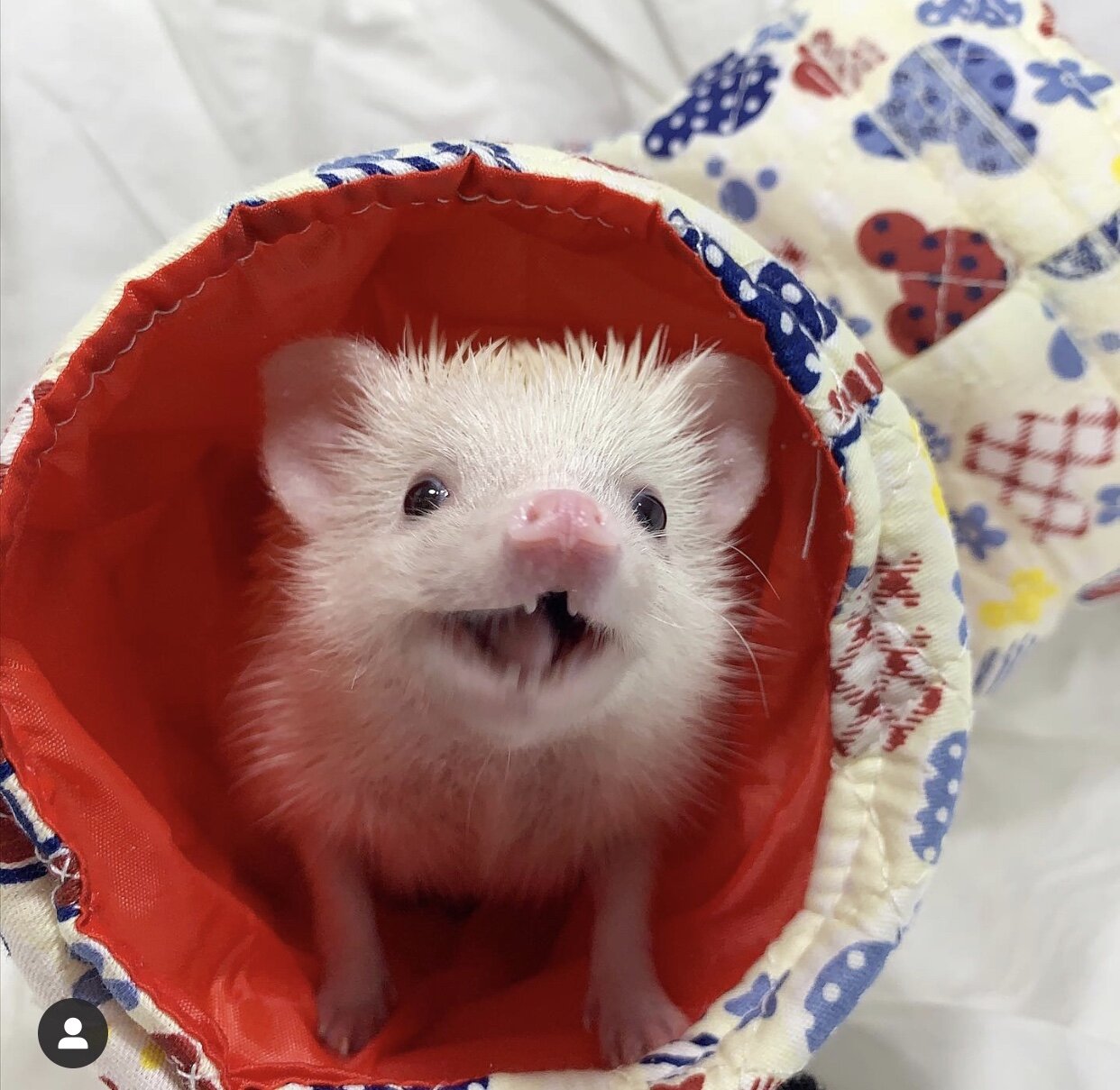
Enclosure
DO NOT use barred enclosures, unless they are lined with something that ensures your hedgie will not be able to stick its head through, or climb up and fall. To adapt an enclosure with bars, you can line the inside with coroplast. Make sure that there is a smooth, non climbable surface at least 9 inches from ground level.
DO NOT use ramps, second levels or have high points UNLESS you have put walls around EVERYTHING. Anything is adaptable . . . but it must be safe! Your hedgehog is surprisingly active at night, but incredibly clumsy! She/he will attempt to explore every corner of its habitat and have what I like to call “rock star parties”, where they trash their hotel room! Remove any hazard of getting stuck, or falling by getting the proper enclosure and toys!
Suitable enclosures must be a minimum of approximately 2' x 3’ but larger is always encouraged. If you’re looking for an enclosure on budget, you can purchase one or more 120 QT clear plastic bins (connect them if there are multiple!)
Bedding
DO NOT use cedar bedding, as this can cause skin and respiratory problems for your hedgehog. Recycled paper bedding, pine bedding or fleece liners are ideal. Make sure any fabric you use has no loose strings.
Ensure your hedgehog does not come into contact with any mites by placing all paper and wood bedding in a freezer or deep freeze for 48 hours prior to use.
Heating & Hibernation Attempts
Original wording — retained for review, not current instructions
HEATING
As African Pygmy Hedgehogs are accustomed to a warm climate, you will need a heat source and back up heating (in case of a power outage). If a hedgehog’s enclosure is not evenly heated at or between 24 and 27 degrees Celsius, your hedgehog will run the risk of attempting hibernation. If you have a room in your house that stays that warm, I would still recommend getting a ceramic heat emitter and a thermostat to make sure the temperature is regulated. A bulb with light is unnecessary, as your hedgehog is nocturnal and generally relies on it’s nose to navigate at night!
Heat pads can be used to give your hog a warm spot to sleep but will not increase the overall heat of the cage and should not be used as the main source of heat and must be additional to the ceramic heat emitter, If you decide to purchase a heat pad, it must be placed UNDERNEATH the cage itself, so it is not an electrical or burning hazard to your hedgehog. Make sure you test the temperature settings before use!
Hand warmers are an excellent backup heat source. It is smart to always have them on hand. We purchase Uniheat shipping warmers online, which are non toxic and last between 10 and 40 hours (depending on which you choose).
Test the heating setup and temperature throughout the enclosure before use.
HIBERNATION ATTEMPTS
Once in hibernation, your hedgehog will not wake up and will eventually die. This can happen if the temperature merely dips, even in a part of the enclosure that your hedgehog hangs out in for a prolonged period of time OR if your hedgehog’s enclosure is set on a cold floor, cooling its belly.
SIGNS OF HIBERNATION ATTEMPT
1) Cool belly (belly should ALWAYS be warm)
2) Shaky and slow when walking (hibernation attempts can mimic signs of WHS, but if your hedgehog comes from good genetics, this is HIGHLY unlikely and is usually due to hibernation attempts other health conditions)
3) Loss of appetite
4) Lethargy
HOW TO PULL A HEDGEHOG OUT OF A HIBERNATION ATTEMPT
1) Immediately take your hedgehog and put it on your chest or stomach for direct skin to skin contact for at least ONE HOUR (similar to hypothermia victims, where no hospital intervention is present, skin to skin contact is the best way to bring the core temperature of an animal up)
2) Keep your hedgehog out until it begins taking its favourite treat (Eating is a sign that your hedgehog is on the mend)
**IMPORTANT** Once you have successfully dodged hibernation, you are NOT out of the woods. Your hedgehog is now even more susceptible to attempting hibernation again, and often after the first attempt, will try again for a second time over the course of the week. You now must increase the temperature in the enclosure for good and make sure it always stays near the top of the range of temperature (27 degrees). You will have to frequently check in with your hedgehog to make sure it’s staying warm enough.
Food
Original wording — retained for review, not current instructions
Your hedgehog’s main source of nutrients will consist of quality cat kibble. It is very important that the kibble have a balance of 15% fat OR LOWER and 30-33% protein. If you choose to mix kibbles, ensure that the average of the kibble equals these percentages.
**Consistently feeding your hedgehog a food that is above 15% fat and 30-33% protein can result in fatty liver disease and cause other health complications.
You will have to read the back of any foods you feed your hedgehog to make sure these percentages are right!
FOOD SUGGESTIONS:
Fromm - Salmon A La Veg (please mix this with another food, as I have found that alone, the salmon recipe can be a lot on their tummies!)
Catit Nuna - Insect Protein and Chicken Recipe
Hedgehog Precision (this is the ONLY hedgehog branded food that is safe and healthy for Hedgies)
Natural Balance Indoor ULTRA Chicken and Salmon Meal
Iams chicken recipe (please mix with another food, as this food contains quite a few fillers and your hedgehog will need additional nutrition)
PLEASE NOT: You can mix foods to AVERAGE the correct percentages! If you have any questions, please contact us!
**Insects like meal worms, superworms, crickets, wax worms, butterworms, crickets and black soldier fly larvea should be fed as regular treats and can be a very useful tool when bonding with your hedgehog! Make sure you always feed your hog a variety of bugs! Too much of one bug is not good for your hedgehog! Below are weekly insect guidelines to follow:
Meal worms : 3 per week (high phosphorus and hard exoskeleton that can cause impaction)
Wax worms: 2 per week (high fat. too much fat can result in fatty liver disease)
Horn worms: 2 per month (high fat. too much fat can result in fatty liver disease)
Butter worms: 1 per week (high fat. too much fat can result in fatty liver disease)
Super worms: 20 per week (contrary to popular belief, you do not have to remove the heads!)
Crickets: 20 per week
Black Soldier Fly Larvae: 40 per week (These are very nutritious and have more calcium than phosphorus! This will help offset the other insects which have higher phosphorus)
PLEASE NOTE: For max. nutrition, it is important to gut load your insects with fresh vegetables, fruits and oats (carrot, apple, spinach, potato and yam are great!). Although many veggies and fruits are hedgehog safe, they do not provide nutrition, as hedgehogs don’t have the enzymes required to synthesize fruits and vegetables as they are, by nature, insectivores.
ALTERNATIVE PROTEINS
Hedgehogs also can enjoy raw pinky mice (buy frozen at pet stores. Thaw at room temp NO COOKING) or boiled egg, boiled chicken or boiled beef (no spices)! If you can find any organ meet (heart, liver, etc) this is also packed with nutrition for them! However, these things are not necessary if you would prefer to opt out.
Accessories
Your hedgehog will need the following to thrive in its new home:
-NON tip water and food dish OR water bottle
*** Be sure to clean your water bottle every few days to keep it free of bacteria.
-Hidey hut to sleep
-Blanket, pouch or anything soft for inside the hidey hut. Make sure there are no loose threads.
-Cat toys such as small stuffed animals, crinkle balls, solid balls that jingle
***Do not purchase any toys that your hedgehog could potentially get its feet or lower jaw stuck in only solid balls or toys
-Wheel
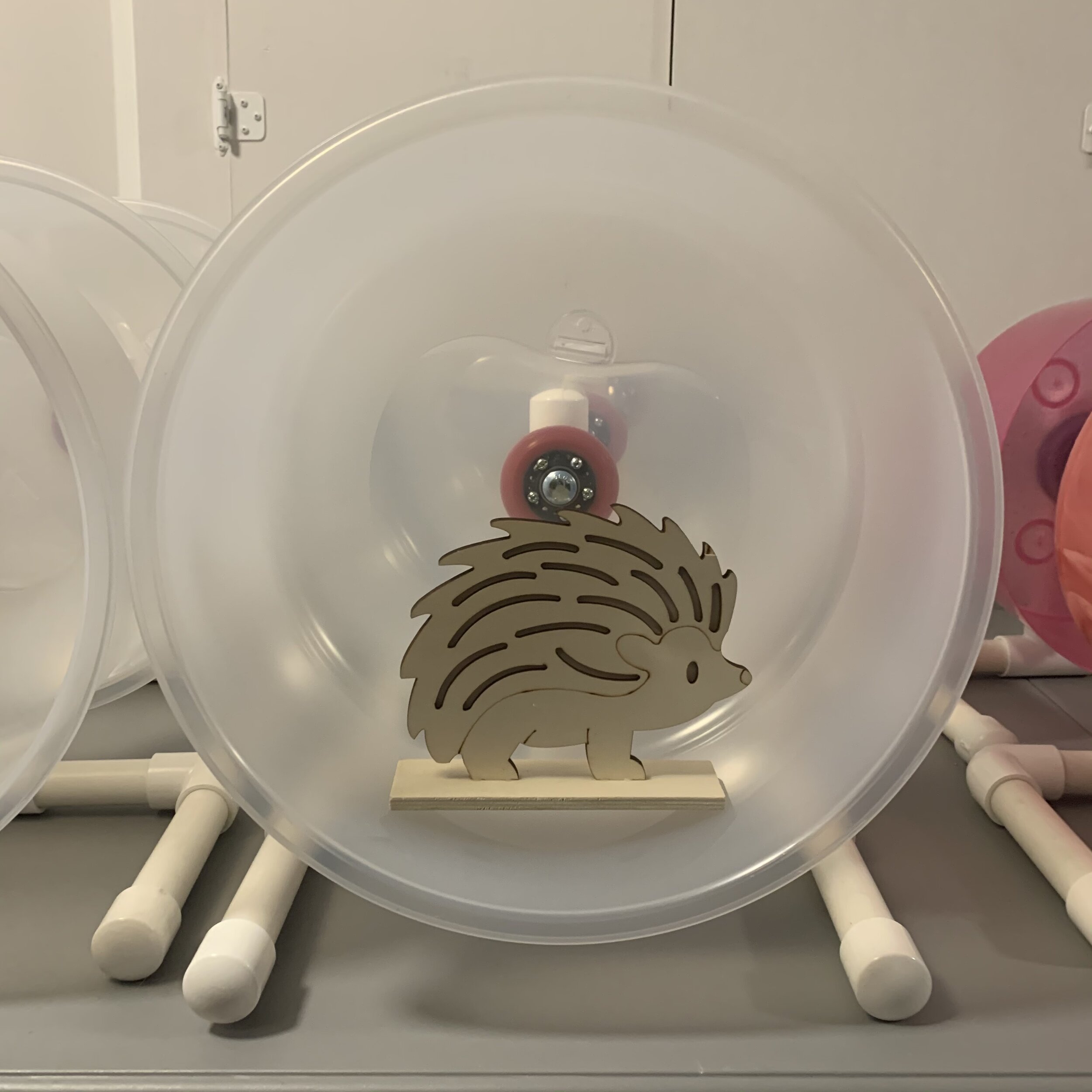
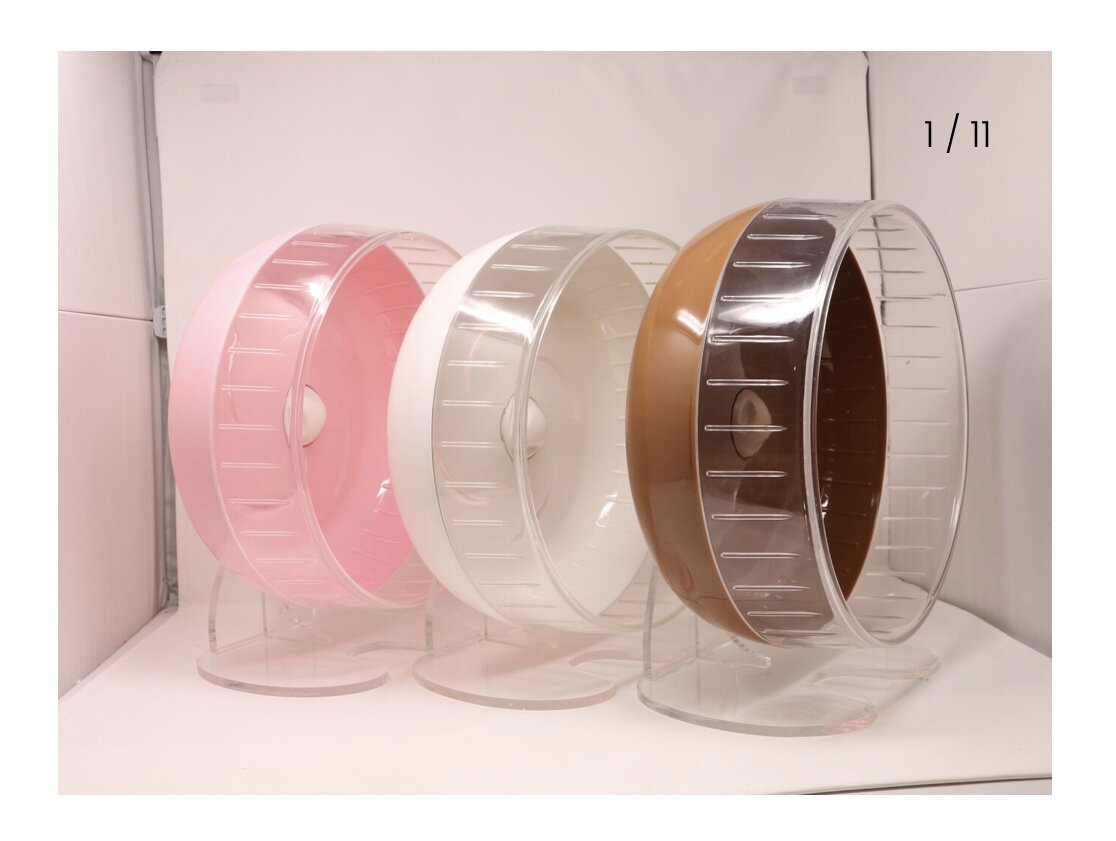
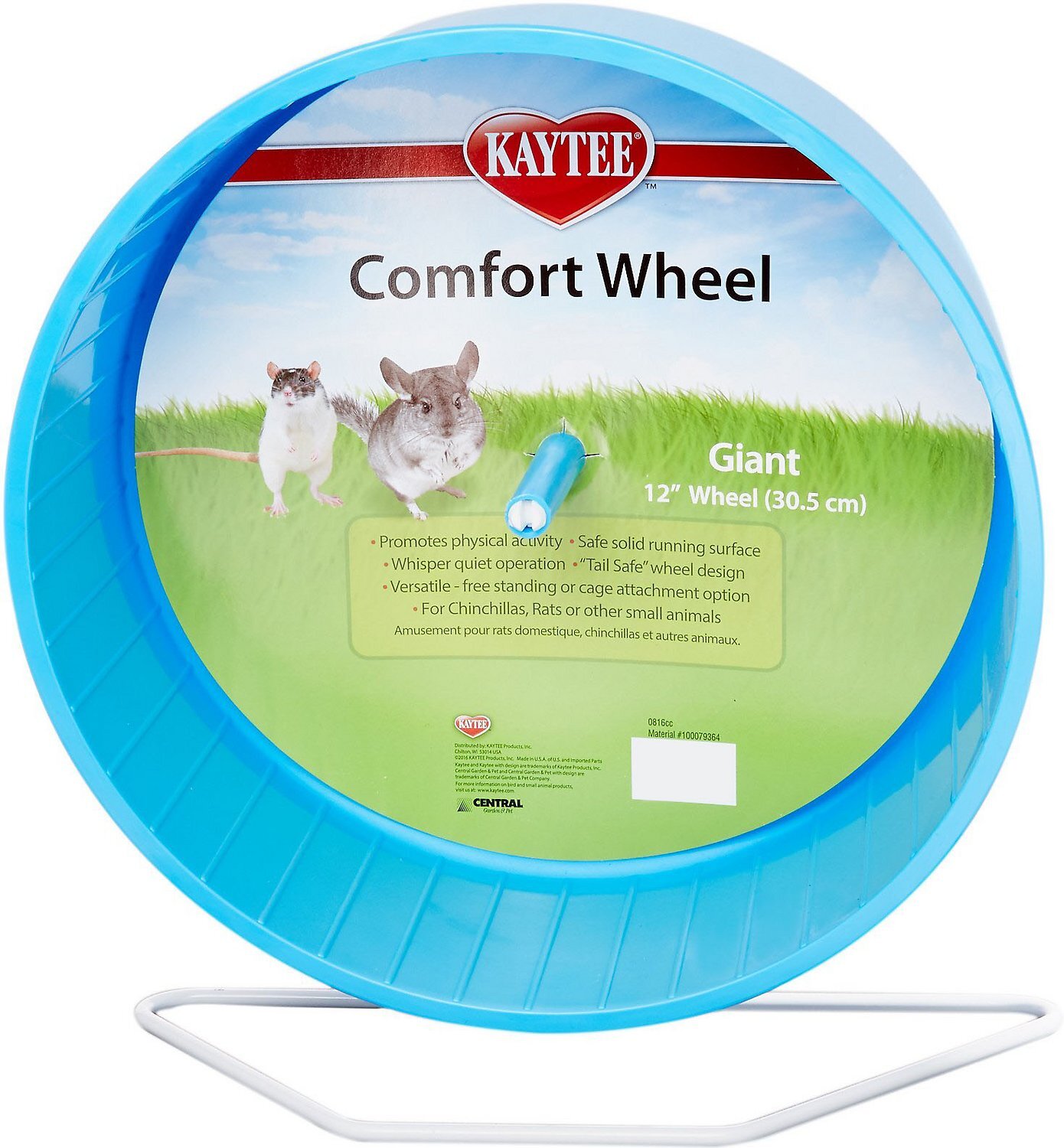
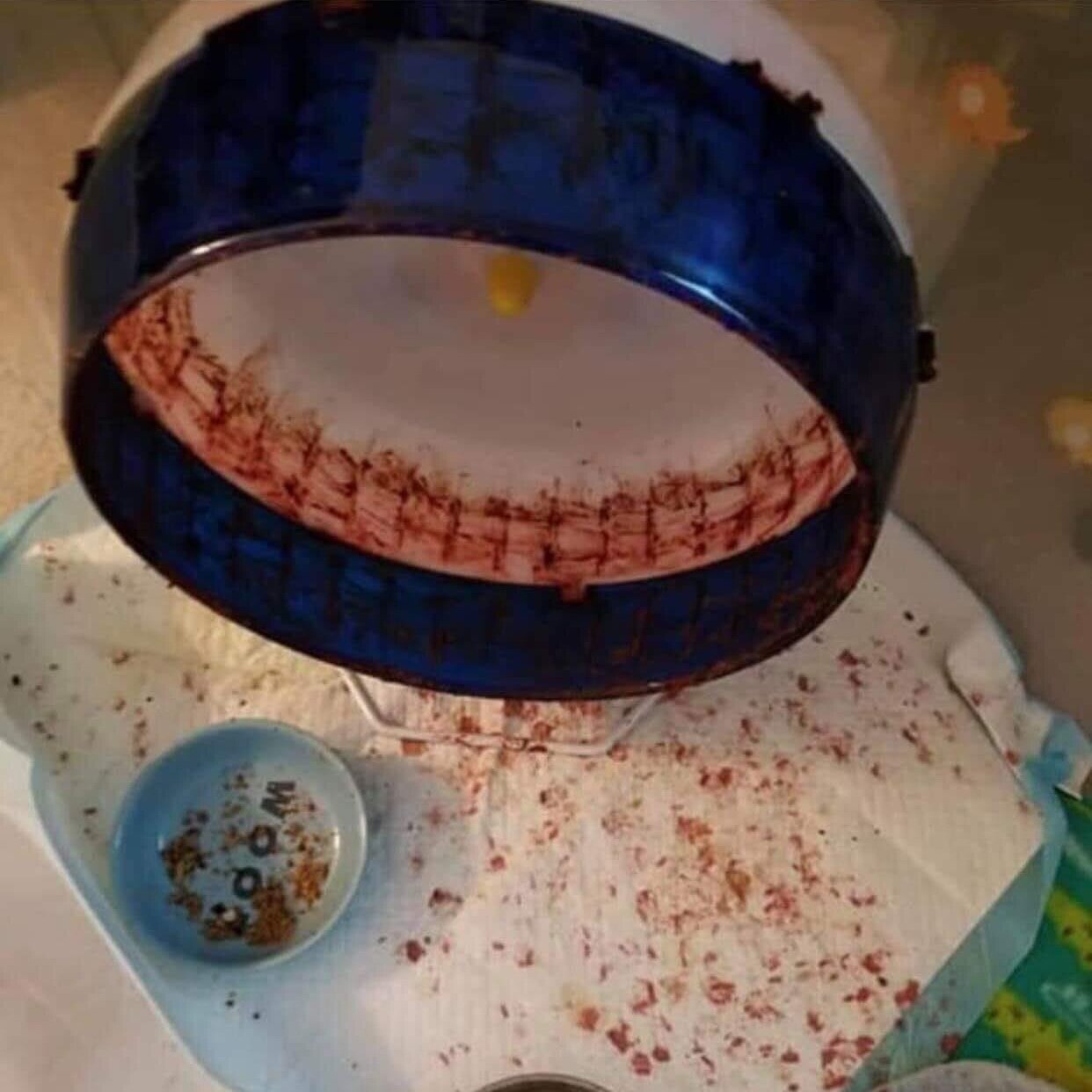
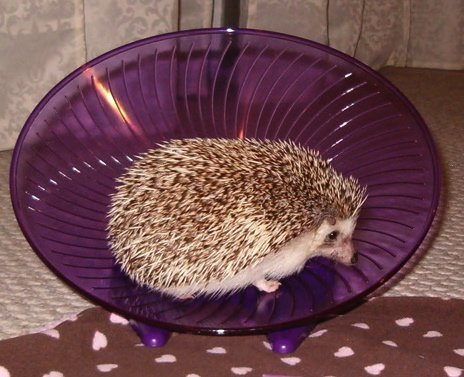
***Wheels should not be placed in the enclosure until 3 months of age. Wheels should be jumbo sized (at least 12 inches). Wheels should be a SOLID PLASTIC surface to run, with NO SEEMS.
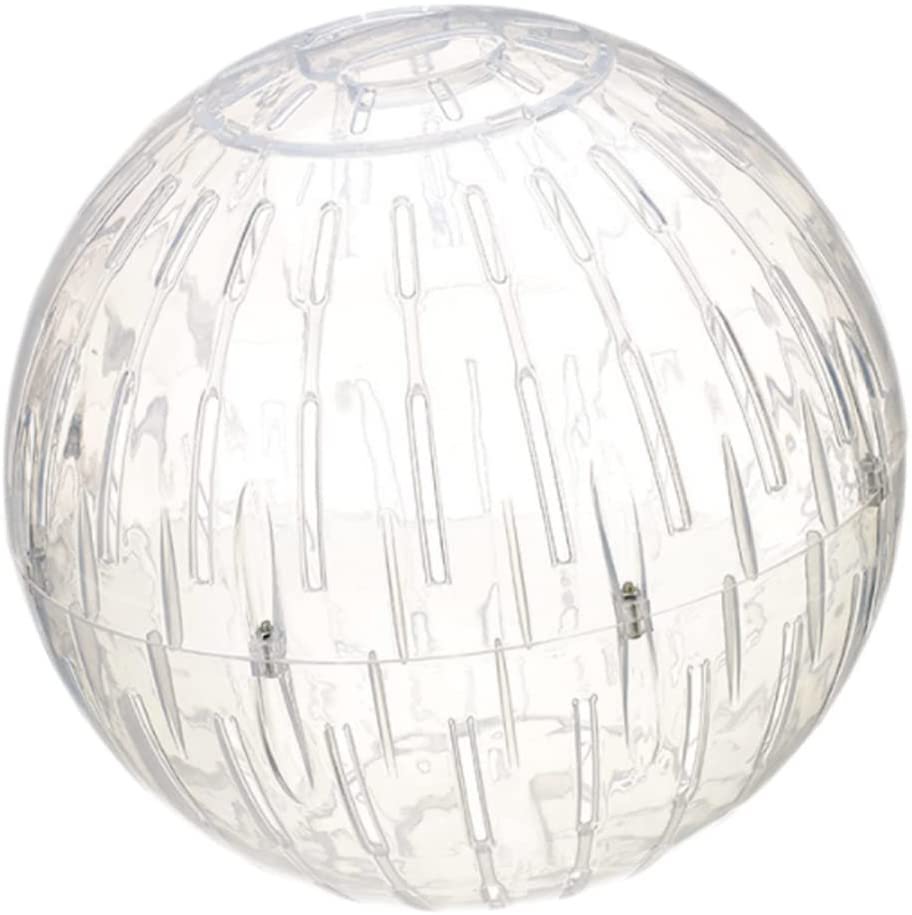
***NO RUNNING SAUCERS OR RUNNING BALLS. These can injure your hedgehog.***
-Food scale. This will not be placed in the cage but instead used to keep an eye on your hedgehog’s weight.
-Small nail clippers
-Point and shoot thermometer is good for testing different spots in your enclosure (optional but highly recommended. Purchase at any hardware store or tool shop)
-Thermostat (ink bird is a very good brand, widely used by hedgehog owners)
-Heat emitter/s
-Playpen with SOLID WALLS. They will climb mesh (playpen optional)
Bonding
Every hedgehog has its own personality and will need time to adjust to any new home, owner and smells.
Hedgehogs have poor eyesight and use their nose for navigation! Here are some helpful tips to help YOUR hedgie get used to your smell:
-Sleep in a soft T-shirt of yours for a couple of nights, then place it in your hedgehogs hidey-hut so that she/he is able to sleep with your scent.
-Wash your hands with the same soap before handling your hedgehog so it associates that smell with TREAT TIME! (leading to the next tip)
-When handling, feed your hedgehog a variety of healthy treats. They will begin to recognize that when they are removed from their enclosure, they will also get food!
-Hang out and let your hedgehog nap on you. If you can get your hedgie to settle down in your sweater, shirt, blanket or pouch and fall asleep, hang out with him/her for a couple hours and let them nap on you! Feel free to move around and make regular noises, so your hedgehog gets to know that this is not a sign of any danger. Allow your hedgehog to be close to your body so it can feel your heat or hear you heart beating.
-Bath time is a great time to bond with your hedgehog. They seem to be less huffy in the water! (Bathing tips in the hygiene section below)
Hygiene
Remember that hedgehogs are messy little critters! They will commonly pee or poop shortly after you wake them up to hang out with them, whether its for relief, or because they are scared! I have found that a good way to ensure this doesn’t happen ON you (haha!) is to give them a foot bath when you take them out. A foot bath will be about 1 inch of water. The water will not only clean their feet but it often encourages them to poop and pee!
Make sure water is tepid! You don’t want to risk hurting your pal.
You will find that every once in awhile, you will have to give your friend more than just a foot bath! As described above the water must be tepid.
DO NOT use dish soap, detergent or any shampoo or hand soap that you would use for yourself.
We use Aveeno Baby - wash and shampoo with natural oat extract. Make sure that anything you do use does not contain harmful chemicals or perfumes. Baby oatmeal washes are usually a safe bet.
**Giving your hedgehog a full bath too often can result in dry skin! I would stick to bathing she/he once per month unless they get really dirty! Foot baths however, can be given as frequently as needed!
NAIL TRIMMING!!! Every owner must trim their hedgehog’s nails, otherwise they may grow long and double back into their own foot, causing wounds. I have researched different ways to trim their nails but ultimately, it comes down to the personality of your hedgehog. Some will let you to do it on their backs, while others will squirm WAY too much! Be patient, you will get it eventually! I have had the highest rate of success trimming nails in the bath!
When trimming the nail, use small clippers and try to make sure you don’t cut the quick (the vein that you can see in the nail). If you end up doing this, its okay and it will usually heal but keep an eye on it.
Quilling & Quill Loss
If your hedgehog is losing quills, it is not always cause for alarm! At 4-6 weeks of age, and again at 6-8 months, it is normal for your hedgehog to shed it’s old quills to make room for news ones.
How can I tell the difference between regular quill loss and quill loss due to a condition or parasite?
If your hedgehog is experiencing normal quill loss, upon close and thorough inspection of the skin, you will see new quill growth coming through all over the body. Some will be just coming through and others will be halfway through the skin. Needless to say, it’s not a good feeling for your hog!
The quills that have been shed will have come out fully at the base and you should see a small ball at the end (follicle).
There will also be no distinct bald patches, but rather, even quill loss and growth.
When should I worry about quill loss?
Quill loss is likely due to illness, bacteria, stress, or parasite when the quills do not shed fully and break off (no follicle), if there are patches of quills missing, if the skin is discoloured, extremely dry and flakey, or if the quilling is happening outside of 4-6 weeks or 6-8 months. It can be due to stress, so if you notice any odd or prolonged quill loss, especially accompanied by any of the above, please see the vet immediately.
Illness
Original wording — retained for review, not current instructions
Mites: If you notice your hedgehog excessively scratching for days, make sure you take them to a vet straight away. The ONLY safe treatment for mites is called Revolution. If a vet prescribes something else, please do not use it. Ask for Revolution or go to another vet.
Before Returning your hedgehog to that enclosure, VERY thoroughly wash everything!
Dry skin: Keep an eye on your hedgehog’s skin! Dry skin can often be cured with home remedies. At Prickly Peach, we add a little bit of high grade pure alaskan salmon oil to their food once a week for dry skin prevention. This will not take effect immediately. You can also rub cold pressed organic coconut oil on ears to prevent or treat tattered ears (feel free to rub a little on their tail, paws and snout as well!). Also watch out when adding too much fat to your hedgehog’s diet for too long! This imbalance can cause change in stool or weight gain.
Skin Infection: If your hedgehog appears to have skin infection (discoloured, flakey skin, bald patches, cysts, boils, inflammation wounds, etc), please go to the vet immediately! DO NOT put any oil products directly on your hedgehog’s skin if there are signs this. Oil traps bacteria, which could lead a bigger problem.
Things to watch for:
-Weight loss can often be a sign of sickness or parasite. If you notice your hedgehog steadily losing weight, take them to your veterinarian.
-Lack of appetite can be an indication of illness. Keep an eye on it!
SOMETIMES lost appetite can also mean that you’ve spoiled your hedgehog with too many treats. If you find they are eating ONLY treats and avoiding their kibble, this my be the case. If it is, you may have to show them tough love and withhold the treats until they eat kibble again!
Your hedghog’s poop can tell you a lot!
-A healthy, solid brown poop is always a good sign!
- Green poops can mean your hedgehog is stressed but they can also indicate illness. If green poop persists for more than a couple of days, see a vet.
-Poops with slime, mucus can indicate gut upset, bacterial infection. Keep an eye on this and see a vet if it persists more than a couple of days.
-Poops with blood must be addressed ASAP, as this could be indication of a bacterial infection or worse.
-Parasites/eggs can also sometimes be seen in stool in the form of small white dots. If you see this, before you panic, think about what you have fed your pal because it could just be the type of food! If it persists and/or if it is accompanied by weight loss, see a vet.
-If your hedgehog has runny stool, it could be because you changed something in their diet (normal). If you have not and you are seeing runny stool for more than a few days, see a vet.
Ultimately you will get to know your hedgehog and if something seems off, a visit to the vet is always the smartest route. Small animals often don’t show signs of sickness until it is serious.
****Please weigh your hedgehog and give him or her thorough checks once a week!****
Inspect between quills and behind ears to make sure skin is healthy. Hold your hedgehog on its back and check eyes, ears, nose, mouth, paws, under arms and genitals). If you do this, if any sickness starts to present, you will know early and be able to address it fast. When a hedgehog starts to show symptoms, sometimes it is already too late! You will know your hedgehog best. If anything is off, a vet visit will be necessary!
Original wheel notes
Names, pictures and cautions retained from the old site. Models, availability and recommendations have not been reconfirmed; these are not new affiliate endorsements.
Review references
Checked October 19, 2026. These references inform the review notes; they do not certify the copied page.